Ebike
Overview
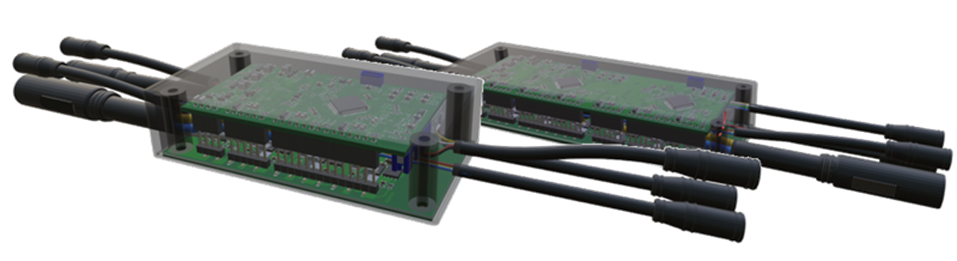
Electric Bicycle hub-motor controller supporting single or dual motors. Motors are driven using Field Oriented Control with >95% efficiency from the controller. Unique and patented control method that focuses on keeping the rider at a noticeable, but comfortable effort level - the most fun part of riding a regular bicycle.
Specifications
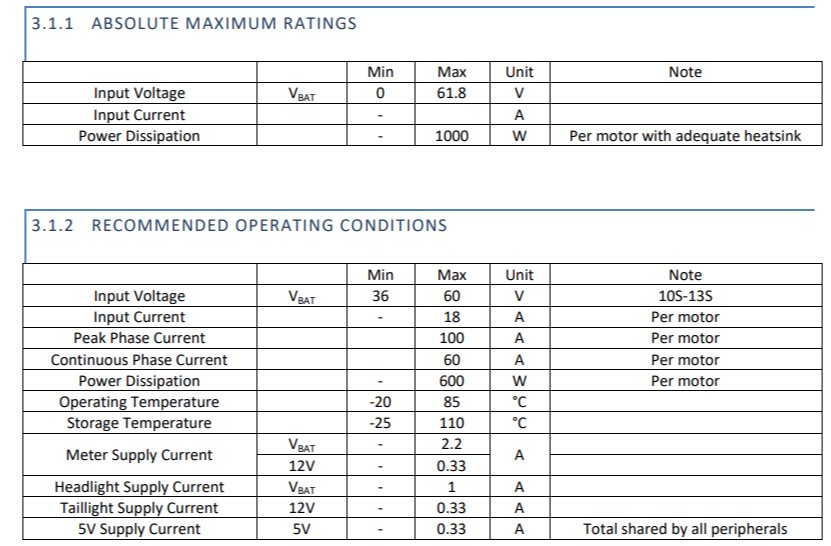
The controller accepts 36 to 60 V lithium battery packs (10S–13S) and draws around 18 A of input current per motor. The hardware can handle up to 1000 W per motor with adequate heat sinking but typically operates at 350W or 500W for standard ebike motors.
Control Modes
TMACHI "Fixed Effort"
This control mode is a unique, patented control mode developed by our controller designers that provides a very smooth ride and has the effect of “leveling out” hills to make the rider feel as if they were always riding on flat terrain. It accomplishes this by trying to keep the rider’s effort at a fixed max value by making up the difference in power needed using the motor. Simply put, it helps less when the rider is on flat ground and a lot when the rider is climbing a hill.
Central Motor Emulation
Bosch and Shimano central motors are the industry gold standard for high-end ebikes. Central motors provide power at the pedals directly proportional to the rider. This makes them feel very smooth and the most “bike-like” experience compared to hub motors. The power is just the rider input power multiplied by a scaling factor, with the scaling factor changing depending on the assist level.
Hub motor controllers, like our controller, are separated from the rider input by the bike’s gear train. The controller has a central-motor-emulation mode that makes it feel like a central motor, despite being a hub motor. It achieves this by using its sensors to calculate the gear ratio and applying that as an additional term in the power calculation.
This emulation mode is not affected by the gear train’s mechanical effects. Available torque to the ground is directly determined by the motor’s torque without the gear ratio changing it as on central motors. However, the ride feel is close to identical.
Assist Modes & Ride Feel
In addition to a no-assist mode, the controller offers three independently tuned assist levels ranging from relaxed to sport. Each level has its own push feel, responsiveness, and available maximum power, so the difference between modes is clear and consistent.
The ride feel is fully tunable: the proportional push that answers each pedal stroke, how quickly the controller adapts to changes in pedaling, the fraction of maximum motor power available, and the target rider effort level can all be configured per mode to match a customer's requirements.
Safety is built into the design. Power assist only engages once the bike is rolling at about 6 km/h or faster, and as temperature or speed limits are approached the controller tapers power down linearly rather than cutting out abruptly.
Field Oriented Control (FOC)
Field Oriented Control is an advanced motor control technique that regulates current in the motor’s magnetic field to maximize efficiency and torque response. By continuously transforming the motor’s three-phase currents into a rotating reference frame, the controller can independently manage torque and flux. This results in smoother acceleration, higher efficiency, and quieter operation compared to simpler control methods like 6-Step.
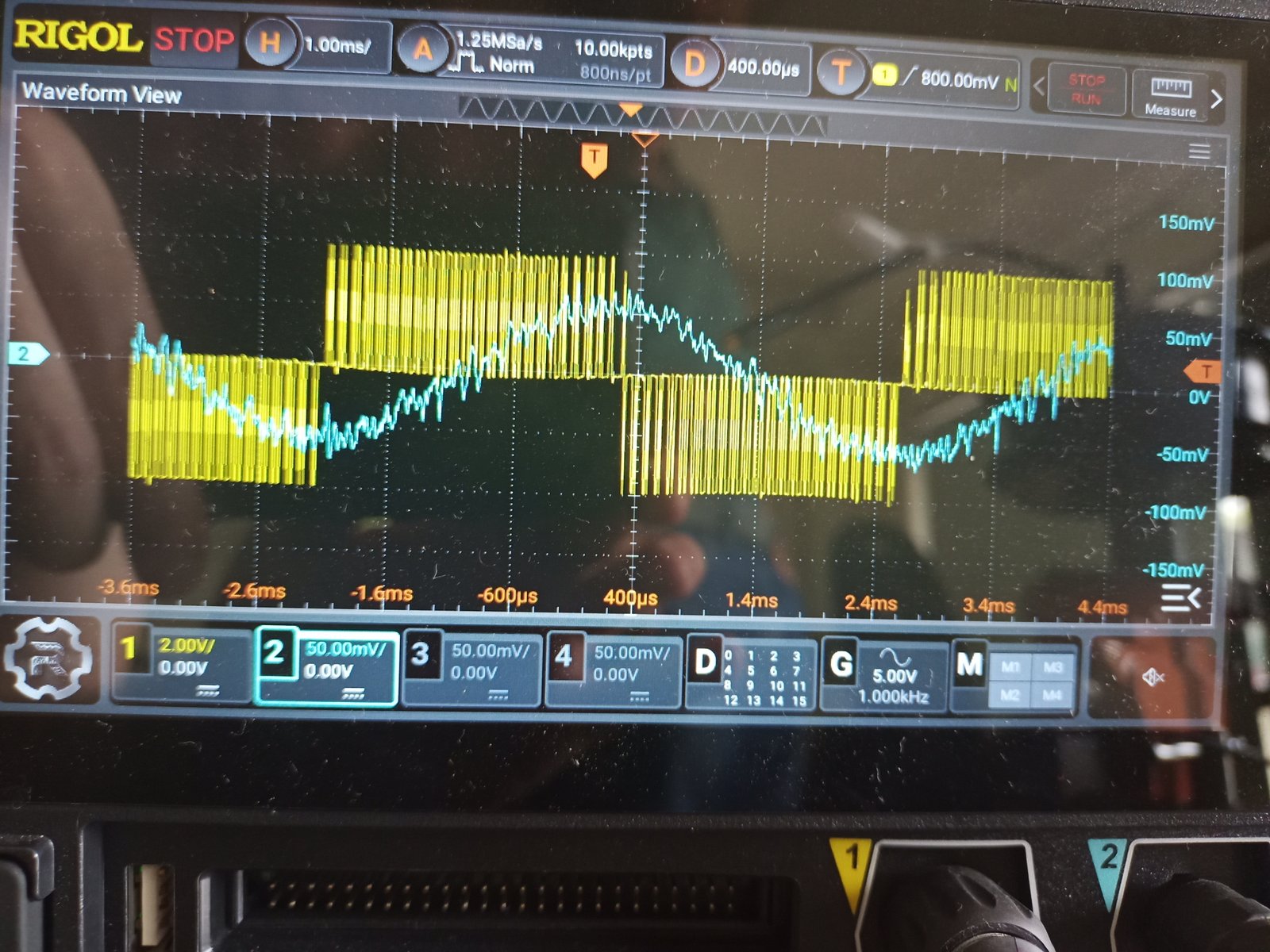
The blue line is from a current probe attached to one of the motor phases. The yellow line is the phase voltage. A PWM of the phase voltage is able to generate a sinusoidal current - FOC in action.
Firmware
The controller runs a real-time operating system that keeps sensor, motor-control, and communication tasks on strict timing, with a hardware watchdog and integrity checks guarding against software faults.
External Hardware
The controller is intended to be used with a torque sensor, and will also support throttle input. The CAN bus protocol allows for communication and error reporting between the meter, controller and BMS. Supports headlight, taillight, turn signals, brake input.
The controller also provides on-board 5 V and 12 V supply rails for accessories, and monitors a full set of inputs: pedal torque and cadence, throttle, wheel speed, motor and power-stage temperature, and battery voltage.
Self-Diagnostics
The controller is equipped with the ability to detect and diagnose a variety of possible problems, from defects in production to disconnected connectors in the field.
The firmware watches over 28 distinct fault conditions, each with debouncing so that momentary glitches do not produce false warnings. Coverage includes over-temperature and over-current protection, over- and under-voltage, motor phase imbalance and disconnection, motor stall, and faults on the torque, cadence, wheel-speed, and hall sensors.
The CAN bus is monitored with heartbeats: the meter, the battery management system, and - in dual-motor builds - the front controller must keep reporting, and a lost connection raises an error on the meter. When no BMS is fitted, the controller estimates battery state of charge from pack voltage so the display stays functional. Faults are shown as codes on the meter for quick identification.
Layout timelapse of an early controller design.
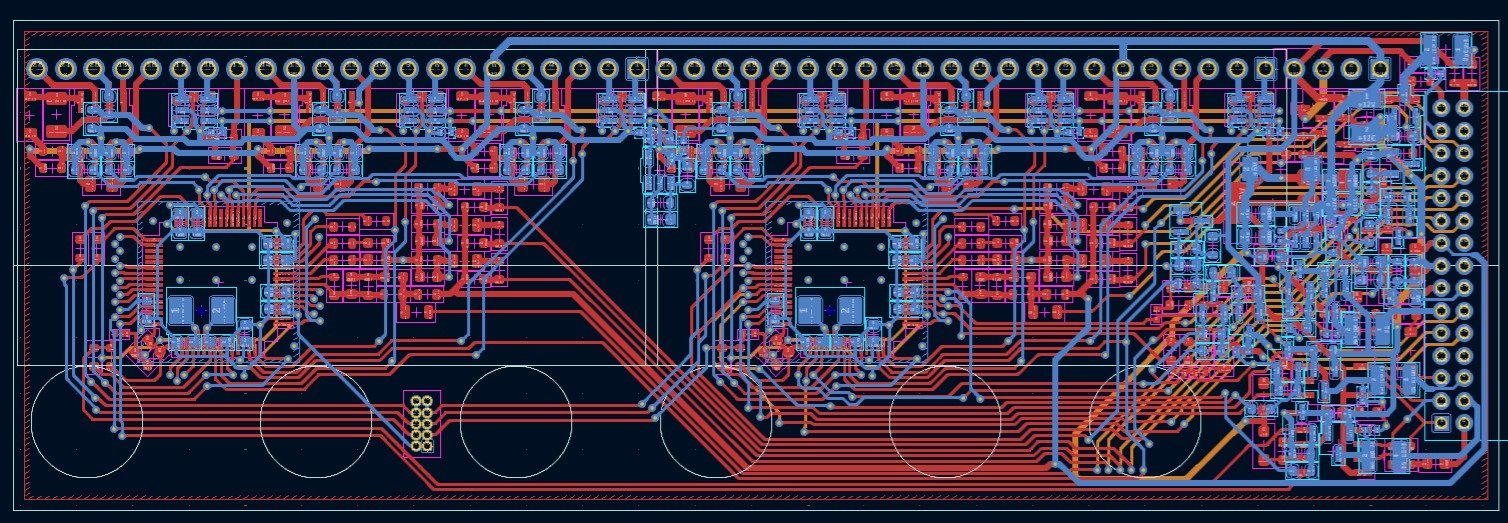
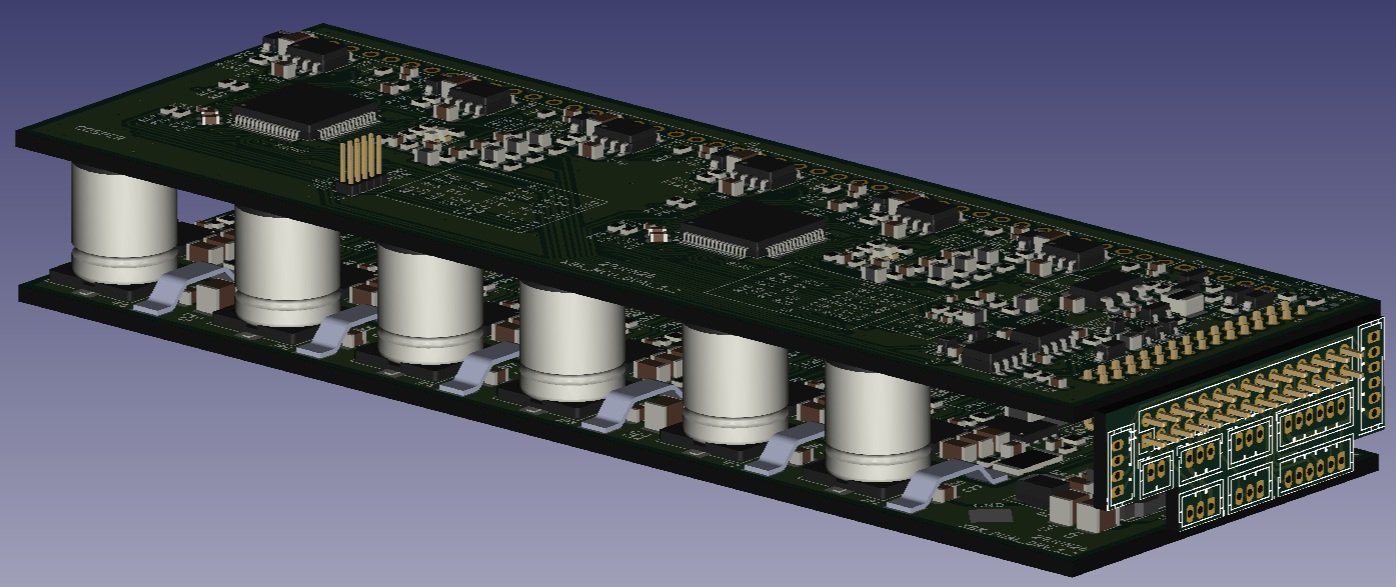
Screenshot of a more recent layout.
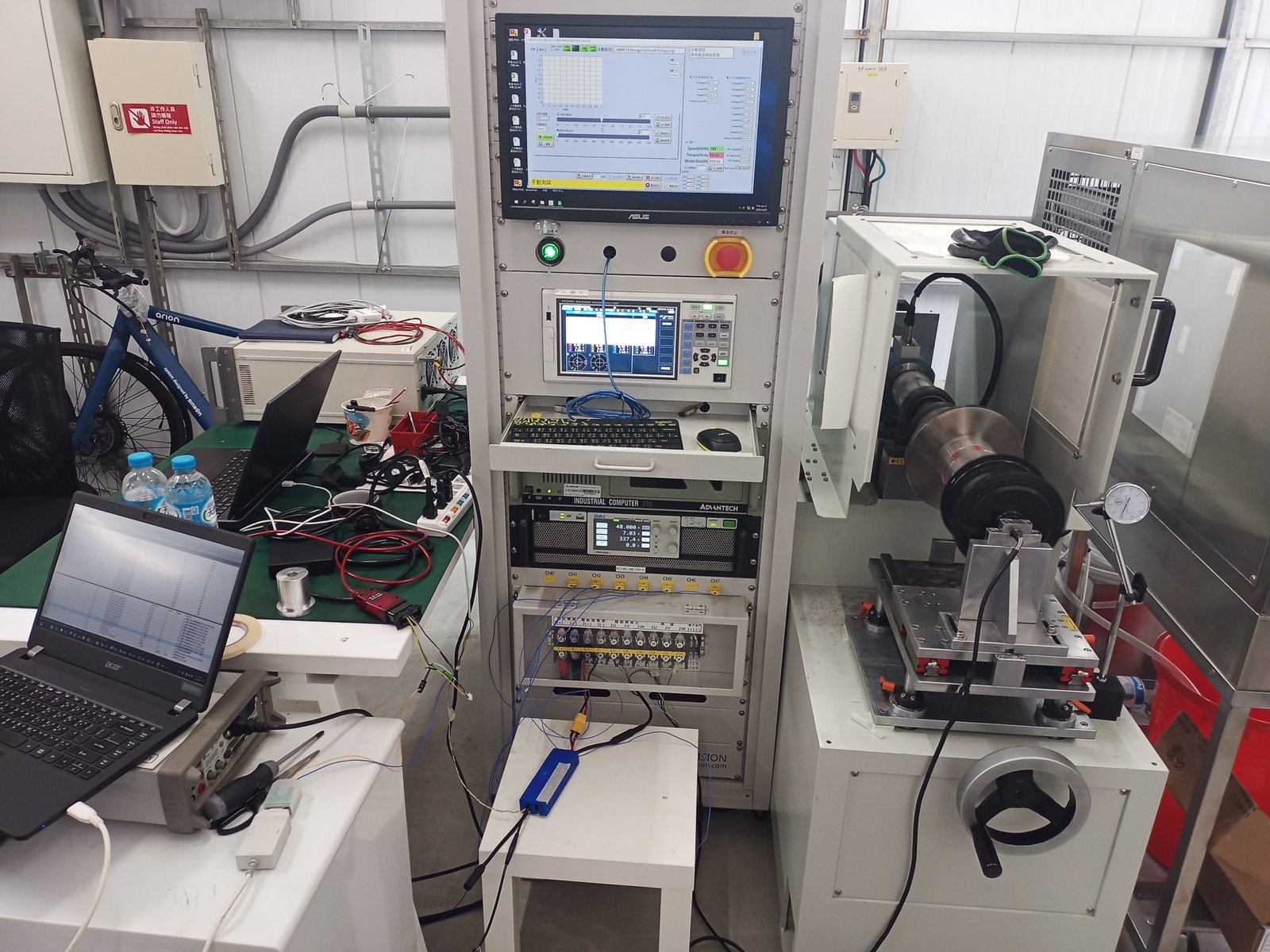
Motor Dyno testing to determine controller efficiency and power capabilities.
Controller vibration testing for endurance.